Share Employment Lands Community Improvement Plan on FacebookShare Employment Lands Community Improvement Plan on X (formerly Twitter)Share Employment Lands Community Improvement Plan on LinkedinEmail Employment Lands Community Improvement Plan link
The City of Belleville has identified the need to expand and strengthen its industrial and employment land base to remain competitive and support long-term economic growth. Industrial lands play a critical role in supporting higher-skilled employment, attracting investment and sustaining the local economy.
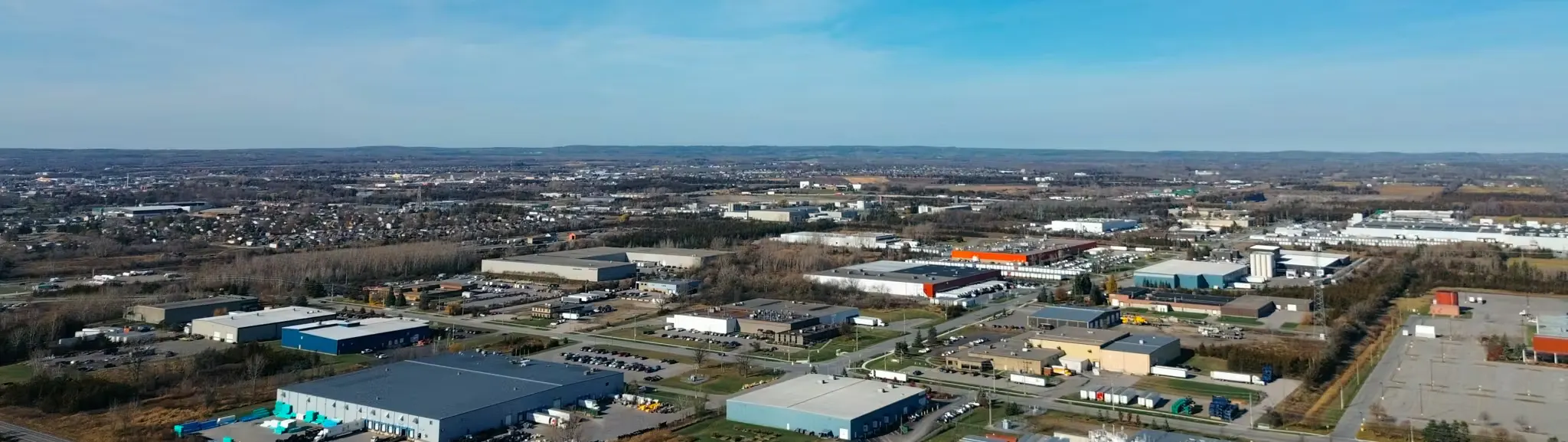
To address these objectives, the City has undertaken significant planning and infrastructure initiatives, including the continued expansion of the Northeast Industrial Park and the strategic acquisition of employment lands to accommodate future industrial growth.
To complement these investments, the Employment Lands CIP will provide targeted financial incentives. A CIP specific to employment land and industrial development is also being introduced to provide an incentive following the removal of the industrial development charge (DC) waiver from the existing DC By-law 2021-201 on July 14, 2025. The proposed CIP would be in effect for a five-year period from June 1, 2026 to May 30, 2031.
The Employment Lands CIP has been drafted by a third-party consultant for Council’s consideration and establishes a framework to stimulate private sector investment in designated industrial areas through a series of financial incentive programs primarily targeted toward development and redevelopment of industrial properties.
The CIP includes five incentive programs, which are detailed in Appendix A of the CIP:
Tax Increment Equivalent Rebate (TIER) – Provides a rebate equivalent to the municipal portion of the incremental property tax increase assessed under industrial tax classes resulting from development over a five-year period.
DC Rebate – Offers a partial rebate of municipal DC to reduce upfront development costs.
DC Deferral Interest Rebate – Supports applicants by reimbursing all or a portion of interest costs charged on DCs that are permitted to be deferred for up to 18 months.
Planning Fees and Building Permit Rebate – Provides reimbursement for certain municipal planning and building permit fees associated with eligible development projects.
Employment Lands Landscape Improvement Rebate – Provides a rebate for up to 50% of eligible landscaping and site improvement costs to enhance industrial property appearance and functionality.
The programs include defined maximum funding thresholds and program stacking limits designed to strategically prioritize development in targeted areas that align with the City’s Official Plan. The program is intended to provide flexibility and sole discretion for the City to address site-specific issues and respond to business needs during periods of economic uncertainty. The program also allows staff to evaluate requests based on the broader economic development benefits.
The CIP further establishes an evaluation framework to guide the City’s review of future incentive requests. Criteria may include confirmed provincial or federal funding commitments, alignment with provincial target sectors, industrial classification by MPAC, industry type and job creation targets.
The City of Belleville has identified the need to expand and strengthen its industrial and employment land base to remain competitive and support long-term economic growth. Industrial lands play a critical role in supporting higher-skilled employment, attracting investment and sustaining the local economy.
To address these objectives, the City has undertaken significant planning and infrastructure initiatives, including the continued expansion of the Northeast Industrial Park and the strategic acquisition of employment lands to accommodate future industrial growth.
To complement these investments, the Employment Lands CIP will provide targeted financial incentives. A CIP specific to employment land and industrial development is also being introduced to provide an incentive following the removal of the industrial development charge (DC) waiver from the existing DC By-law 2021-201 on July 14, 2025. The proposed CIP would be in effect for a five-year period from June 1, 2026 to May 30, 2031.
The Employment Lands CIP has been drafted by a third-party consultant for Council’s consideration and establishes a framework to stimulate private sector investment in designated industrial areas through a series of financial incentive programs primarily targeted toward development and redevelopment of industrial properties.
The CIP includes five incentive programs, which are detailed in Appendix A of the CIP:
Tax Increment Equivalent Rebate (TIER) – Provides a rebate equivalent to the municipal portion of the incremental property tax increase assessed under industrial tax classes resulting from development over a five-year period.
DC Rebate – Offers a partial rebate of municipal DC to reduce upfront development costs.
DC Deferral Interest Rebate – Supports applicants by reimbursing all or a portion of interest costs charged on DCs that are permitted to be deferred for up to 18 months.
Planning Fees and Building Permit Rebate – Provides reimbursement for certain municipal planning and building permit fees associated with eligible development projects.
Employment Lands Landscape Improvement Rebate – Provides a rebate for up to 50% of eligible landscaping and site improvement costs to enhance industrial property appearance and functionality.
The programs include defined maximum funding thresholds and program stacking limits designed to strategically prioritize development in targeted areas that align with the City’s Official Plan. The program is intended to provide flexibility and sole discretion for the City to address site-specific issues and respond to business needs during periods of economic uncertainty. The program also allows staff to evaluate requests based on the broader economic development benefits.
The CIP further establishes an evaluation framework to guide the City’s review of future incentive requests. Criteria may include confirmed provincial or federal funding commitments, alignment with provincial target sectors, industrial classification by MPAC, industry type and job creation targets.